If tomorrow were the end of my life —
what would I regret?
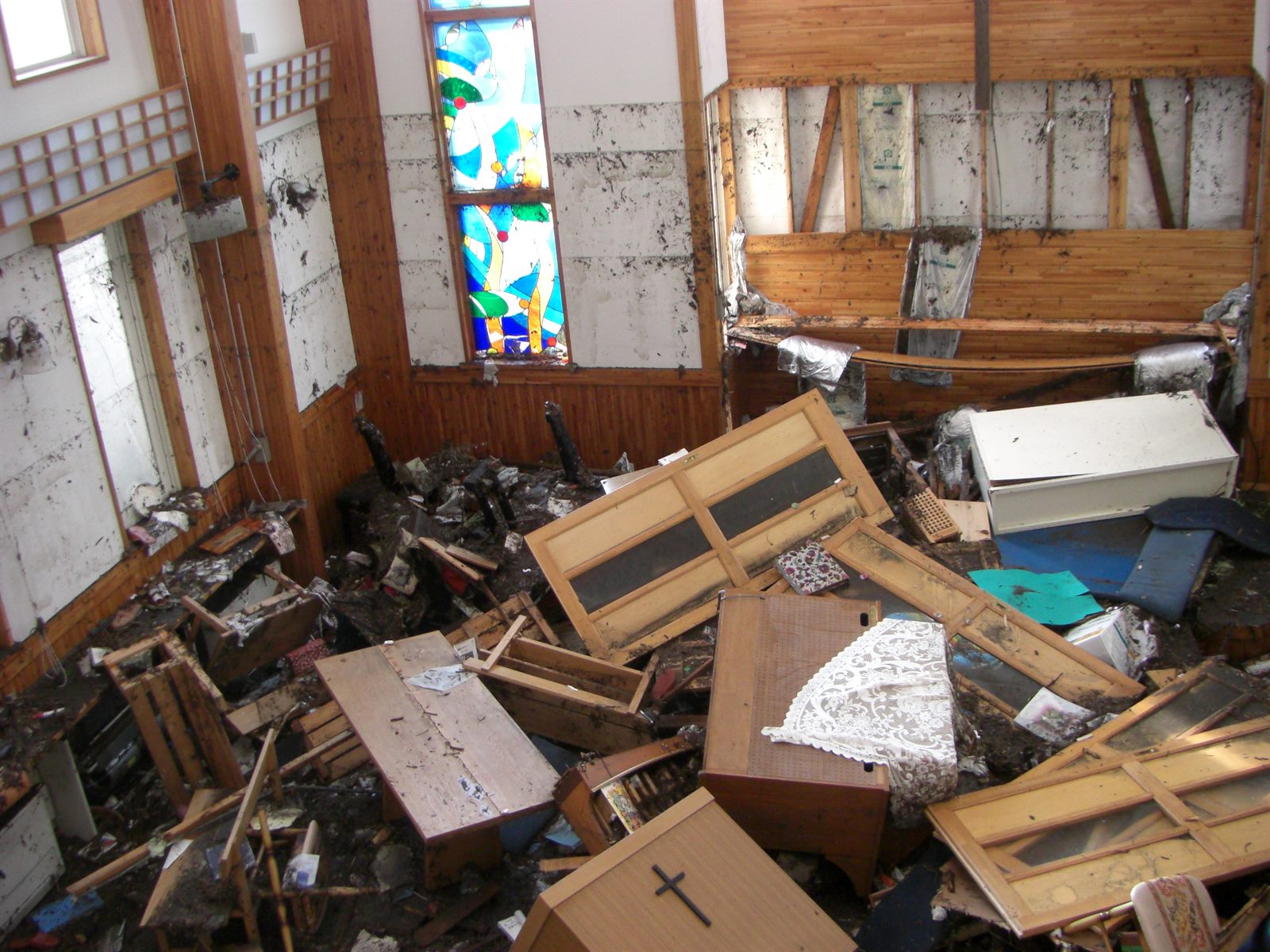
Fifteen years ago, my town was swallowed by a tsunami. The grand piano in the sanctuary lay overturned in the mud, its three legs pointing to the sky.
—And yet, that piano found its voice again, and came home.
So did I.
A Tenor's Pilgrimage · Japan → Britain · 2026
I
That Day — The Upside-Down Piano
On 11 March 2011, the Great East Japan Earthquake occurred, and the tsunami it unleashed struck many cities and towns along Japan's eastern coast. Kamaishi, the town where I was living at the time, was one of them. Water reached the ceiling of the sanctuary's ground floor. I fled to the hill behind the church and escaped harm.
What I found when I came back the next day was a mountain of mud. The altar and wooden chairs lay toppled and tangled together. In the middle of it all, the grand piano lay overturned, its three legs in the air — lifted, it seems, by the tsunami, and set back down upside-down.
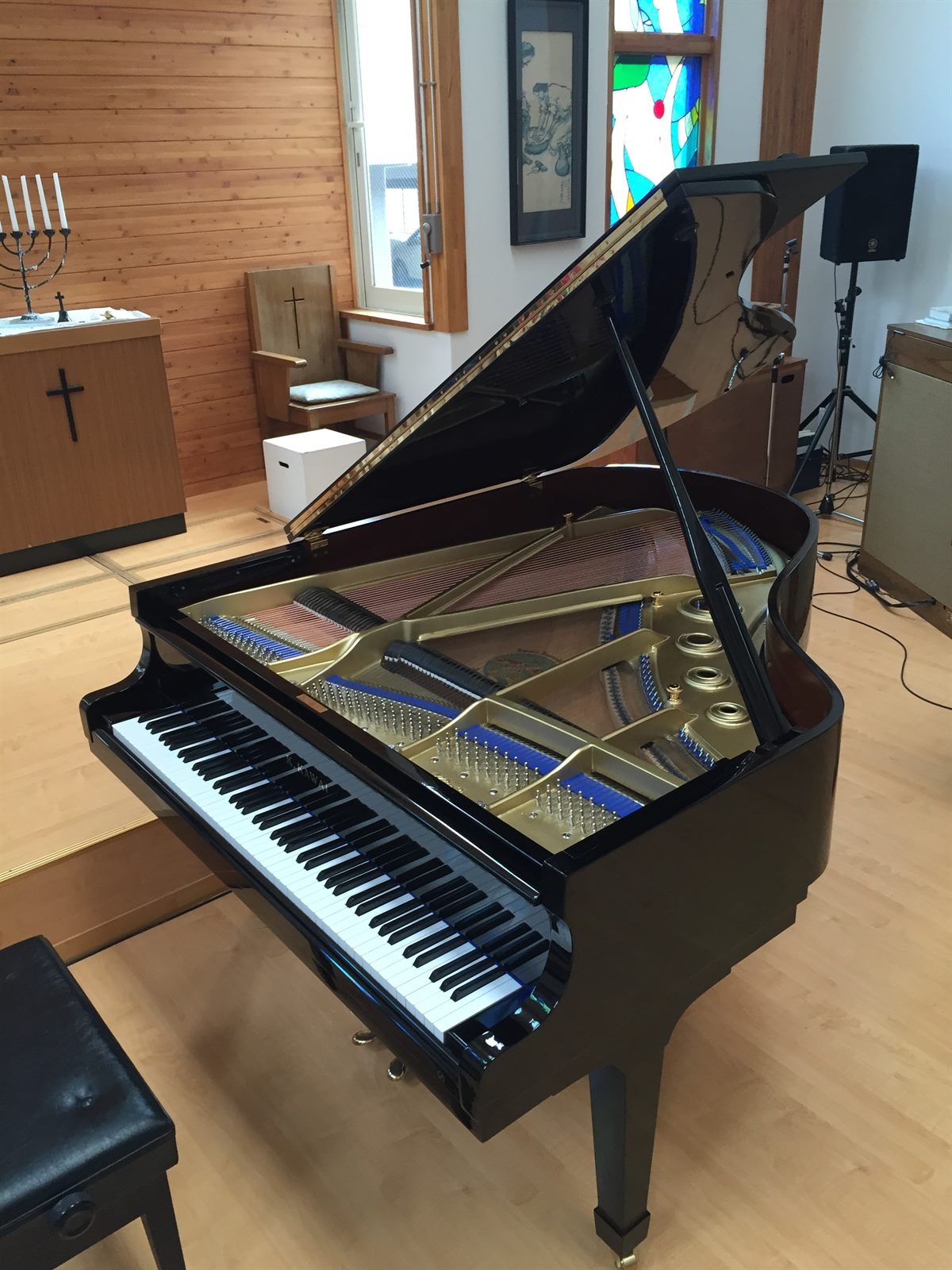
Volunteers helped set the piano upright again. It sat untouched for a while — and then, on 30 April, it sounded once more. A wounded piano, in a wounded place, making music through its wounds.
To me, it looked like a vision of a wounded person rising again.
Scripture says Christ himself rose again still bearing his wounds.
"Christ is here — don't you dare throw it away," I kept telling people. The piano was dried out for four years, made new, and in 2016 — five years after the disaster — came home to the sanctuary, with a song of resurrection: "Welcome Home."
II
My Heart, Breaking
A church that had itself been struck by disaster, supporting disaster survivors — I took that as my calling, and grew a little too fervent about it. I'd light fires in oil drums, set out chairs, call out to passers-by: "Come and rest a while." "Tough for the church too, isn't it," people would say back. I felt accepted, part of the community.
But I was carrying three jobs at once: the weekly service, supporting survivors, and rebuilding a wrecked building. Any one of those alone would have been hard. Carrying all three at once — within two weeks, my heart began to break.
The diagnosis was adjustment disorder — what people often call disaster depression. I took half a year off. Even after I went back to work, still not fully recovered, I was exhausted the whole time.
"A wishy-washy, indecisive pastor" — that's how he describes himself. But being able to expose your own weakness is, in its own way, a kind of strength.— from the Asahi Shimbun series "Tendenko: Prayers"
III
The Day I Hit Bottom
Even then, what held me up were words from scripture: "God makes his sun rise on the evil and the good, and sends rain on the righteous and the unrighteous." The sun doesn't rise because I'm trying hard. Rain doesn't fall because someone is good. Simply waking to a new morning is, in itself, a gift, freely given.
I decided to give thanks for four things, every day: food, clothing, shelter, and the people I live alongside. On the night of the tsunami, we had no food. That's exactly why I understand — what we take for granted is never a given.
It was around the time I hit bottom that a single question came to me.
If my life ended tomorrow,
what would I regret?
Not because I'm admirable, and not because I turn my face to God —
even when I'm neither, I am loved, without reason.
IV
The Dream I Remembered
This wasn't actually the first time those words changed my life. One morning, brushing my teeth, the words "live without regret" had suddenly dropped into my heart — back when I was settling into a career as a researcher. I stepped off that path and became a pastor, barely thinking about money at all. My father's words were behind me: "Don't choose your path by money. Whatever you need, God will provide." And now, at the bottom of my disaster depression, those same words came back to me — this time, as a question.
Asked what I'd regret if I died tomorrow, what I remembered was a dream from my student years. Through years of choral singing in high school and university, I encountered sacred music — the works of William Byrd, Thomas Tallis, composers of Reformation-era England — and it captured my heart completely. Believing in Jesus, and singing sacred music, had become one and the same thing.
There was a choir I longed for: the choir of King's College, Cambridge, England — one of the finest choirs in the world. But what I truly wanted wasn't to hear a concert. It was that same music, sung within an actual service of worship.
Then came marriage, children, work — and the dream was completely forgotten. For more than twenty years. It wasn't until 3.11 broke me down that I remembered it at all.
V
Pilgrimage, and Wanting to Sing
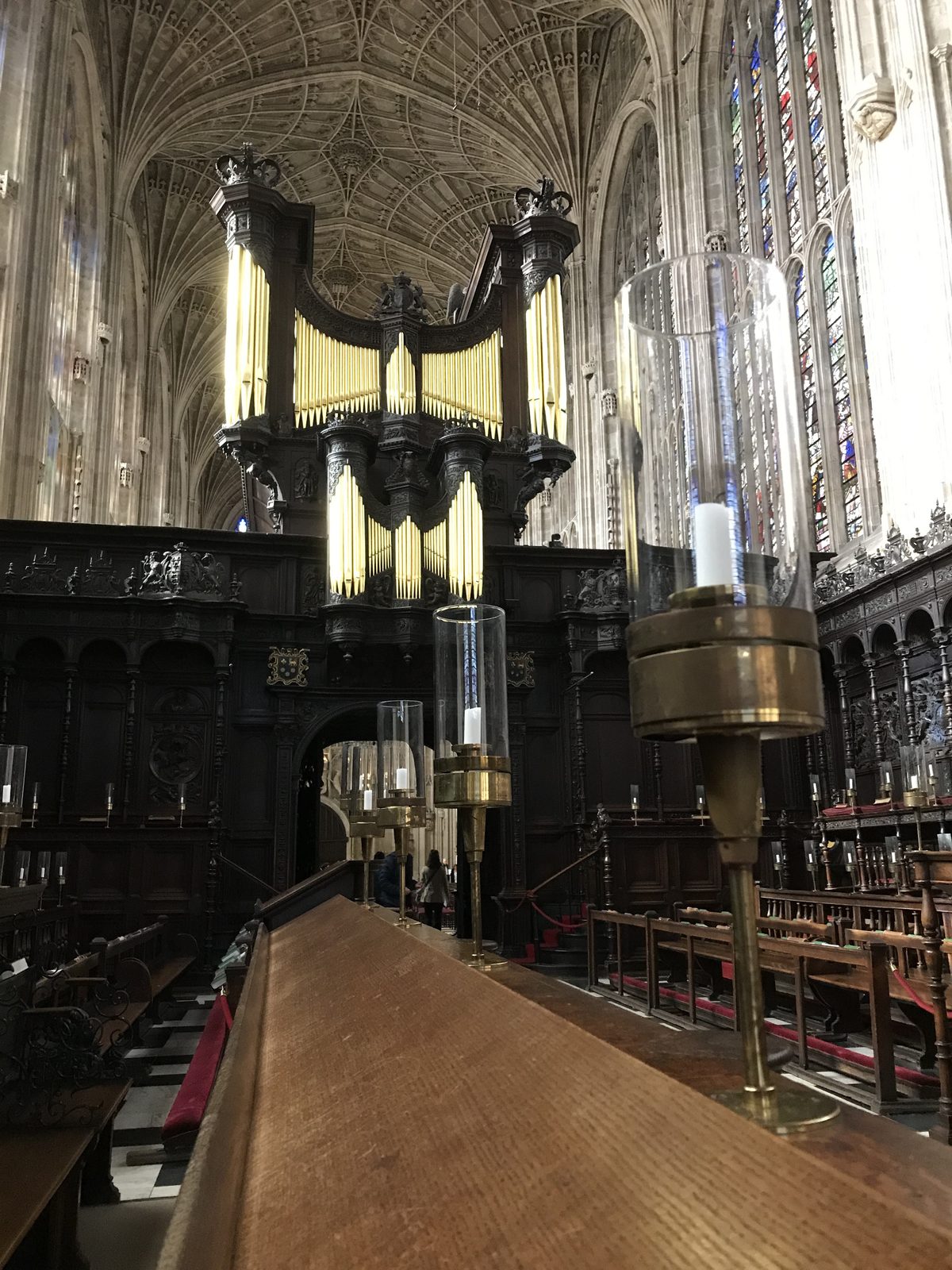
2018. I set out on what was, in effect, a pilgrimage to London and Cambridge. I went to Choral Evensong nearly every day, and in the final week I was going from one service straight to the next. Simply being in that space was pure joy. I had rediscovered the origin of my own faith. But once I was home and some time had passed, a new hunger appeared — I wanted to sing there myself.
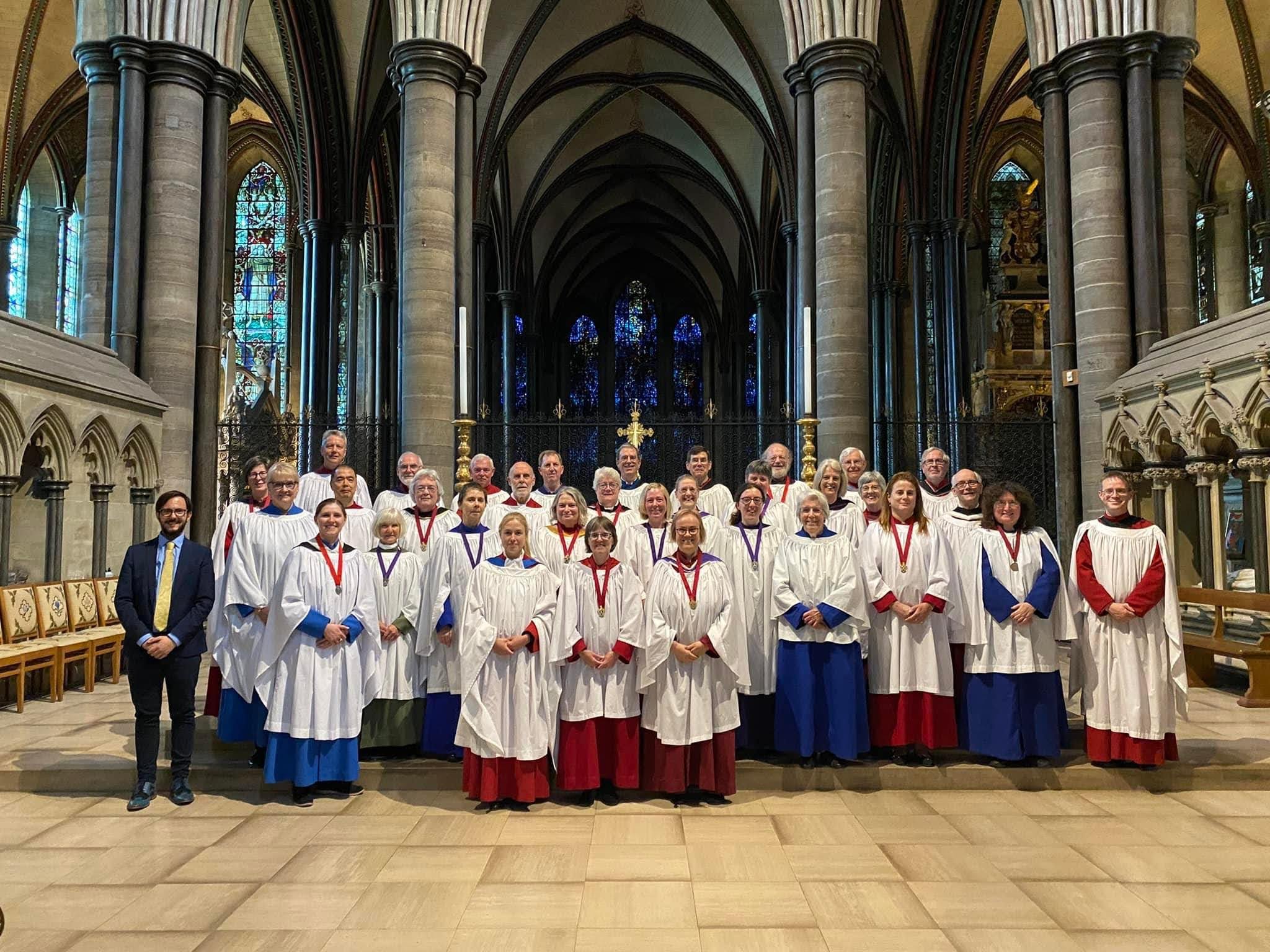
2023. I auditioned for an RSCM (Royal School of Church Music) choir over Zoom, from this very sanctuary — and passed. At Salisbury Cathedral and Bristol Cathedral, I sang as the only Japanese person there: thirty pieces in a week. Thirty-eight years after I first encountered a Mass setting in high school, I had finally fulfilled the dream of singing a Mass, choral, within the liturgy itself.
"That must be the memory of a lifetime," people told me.
—"No — I don't intend it to be. I'm going back."
VI
A Sight Japan Doesn't Have
In Britain's cathedrals, music is offered every single day, as an act of worship in itself. Not as a concert. Not as a competition. Not to please an audience, and not to be judged by a panel. Simply, to be offered to God.
Sacred music was written for exactly that purpose in the first place. What I had always wanted to sing was that original form.
And — this sight does not exist in Japan.
Which is exactly why it's worth pursuing.
VII
So, I Decided
As long as you're thinking "someday," you'll probably never go. Realising that, I turned the wheel of my life.
In March 2026, I resigned from the pastorate of Shinsei Kamaishi Church, where I had served for nineteen years. This summer, I'm going to Britain. At the end of July, to the RSCM Residentiary Choir in Edinburgh.
Honestly, nothing beyond that is decided. All I have is a hope — that from September through Christmas, I'll be singing the daily services as a member of a British cathedral choir. Where, and in what choir, I still don't know.
My wife and children won't be joining me on this uncertain road — they'll stay in Morioka. I'm crossing the sea alone, with no guarantees at all.
But looking back, my life has always been a series of reckless steps. From the childhood adventure where I took my younger brother to Koshien with nothing but a train timetable to guide us. From the entrance exam I sat, believing only the back half of "no one with your grades has ever gotten into Tokyo University" — that it was "just past data." From the day I became a pastor without a single thought for money. Each time, I was helped by people, sustained by grace, and somehow made it through.
Never let "it's hard" be a reason not to do it.
VIII
Not an Ending, But a Beginning
This challenge isn't a finish line. It's a beginning. I have a vision that, so far, only has a name — "Yanagiya Choir Academy." I want to bring back what I gain in Britain, and plant it in Japan.
Japan already has world-class choral singing. But it's choral singing as a business — sung for an audience, for applause. A choir of that same high standard, existing for one purpose alone — offering music to God — doesn't yet exist here. Building it is my ultimate goal.
Frankly, I think "it's probably impossible" too.
But — the moment you give up, the game is over.
Even so, walking forward with that hope in mind — one step, two steps — can never be wasted. Like the piano that rose again still bearing its wounds, we too, wounded as we are, carry a calling, and a new life. That first step, I'm taking now.
Continue this, together
First, let's connect
Questions, media inquiries, questions about supporting the project — anything at all. How to support, and how to reach me, are on the support page.
Support & Contact